
Façade and glass cleaning by drone
Heated osmosed water, low pressure, no detergent on glass. A tethered drone does the upper floors at 500 to 800 m² per hour, a water-fed pole and a platform finish what the drone cannot reach. Nobody hangs in front of your windows.
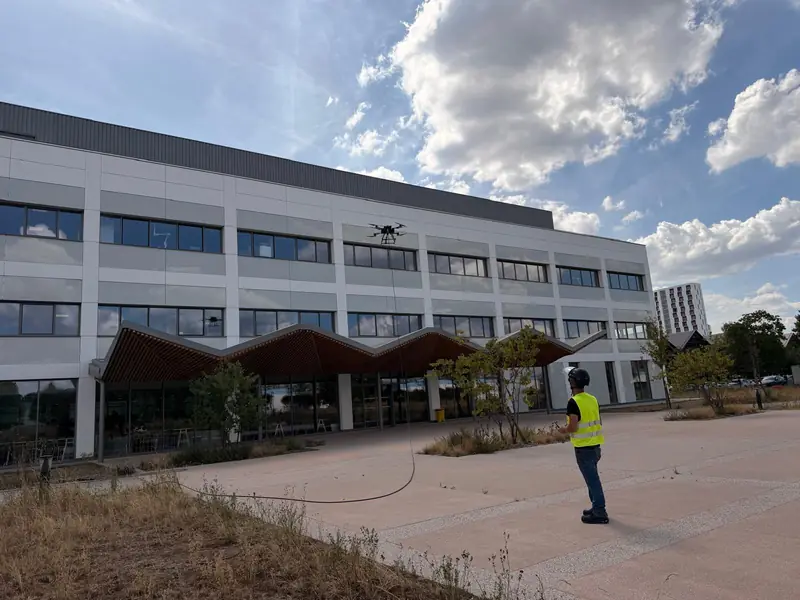
Saint-Gobain RechercheFirst job led to a contract for two passes a year.
What we clean
- Glass curtain walls on office towers, hotels and condominiums
- Windows on upper floors, including where gondolas cannot run
- Glass roofs, atriums and canopies, often impossible to reach from inside
- Cladding: aluminium, composite panels, painted or coated metal
- Mineral façades: render, concrete, stone, with a protocol per material
- Closed courtyards and curved façades where a platform cannot drive in
In France we have written cleaning protocols per support: limestone, flamed stoneware, concrete, lacquered steel. The same discipline applies in Thailand: we test a small area first and adjust temperature, distance and passes before cleaning the whole façade.
The method, step by step
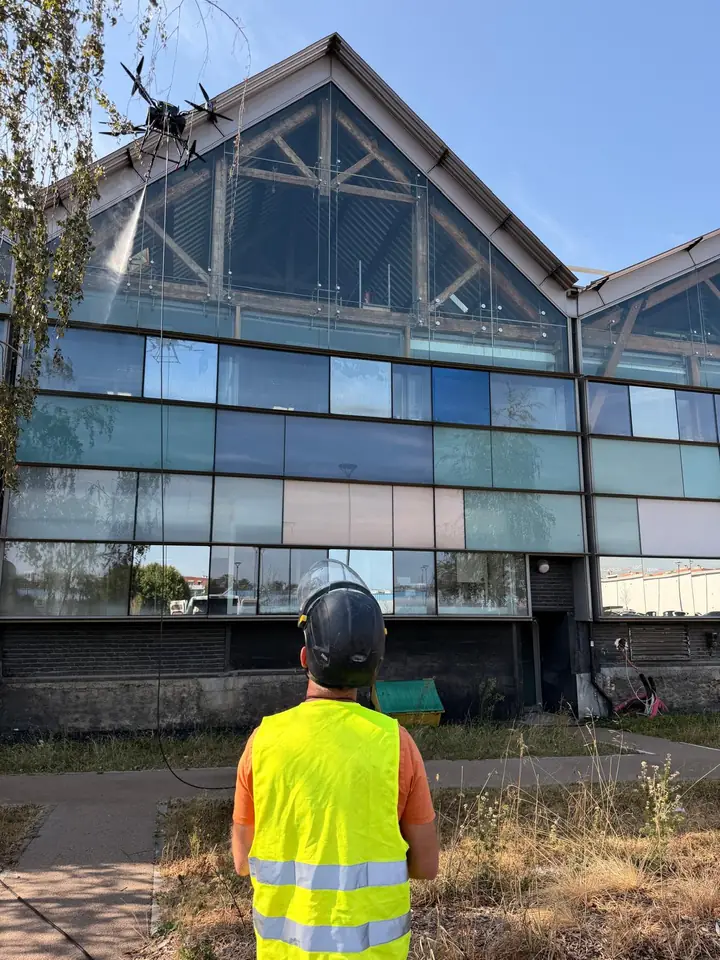
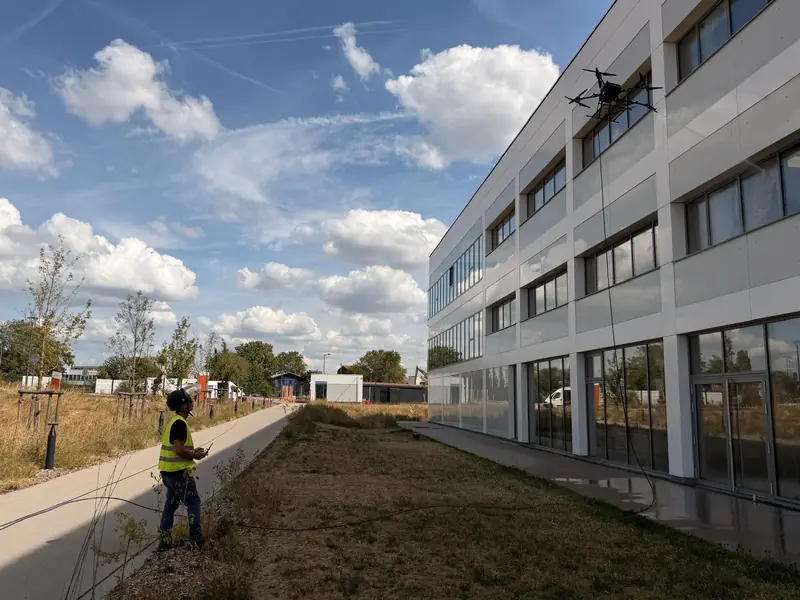
The drone is tethered: power and water come up through a cable and hose from the ground unit. It can stay in the air as long as the job requires, and it cannot fly away.
Purified water
Tap water goes through reverse osmosis to remove minerals. Without minerals, water dries without spots, so there is no need to squeegee or wipe.
Heat, low pressure
Heated water lifts grease, soot and pollution film. Low pressure protects seals, joints and coatings. The economical nozzle puts the water on the surface, not in the air.
Rinse and finish
Top-down passes with overlap, then a final rinse. The pole or the platform handles frames, corners and lower levels in the same visit.
A research centre with large glass façades
The building has long bands of glazing over several floors and a glass entrance. We cleaned the upper floors by tethered drone and the lower levels and entrance by water-fed pole, with heated osmosed water and no detergent.
The result was good enough that, after the first intervention, Saint-Gobain Recherche signed a contract for two passes a year.

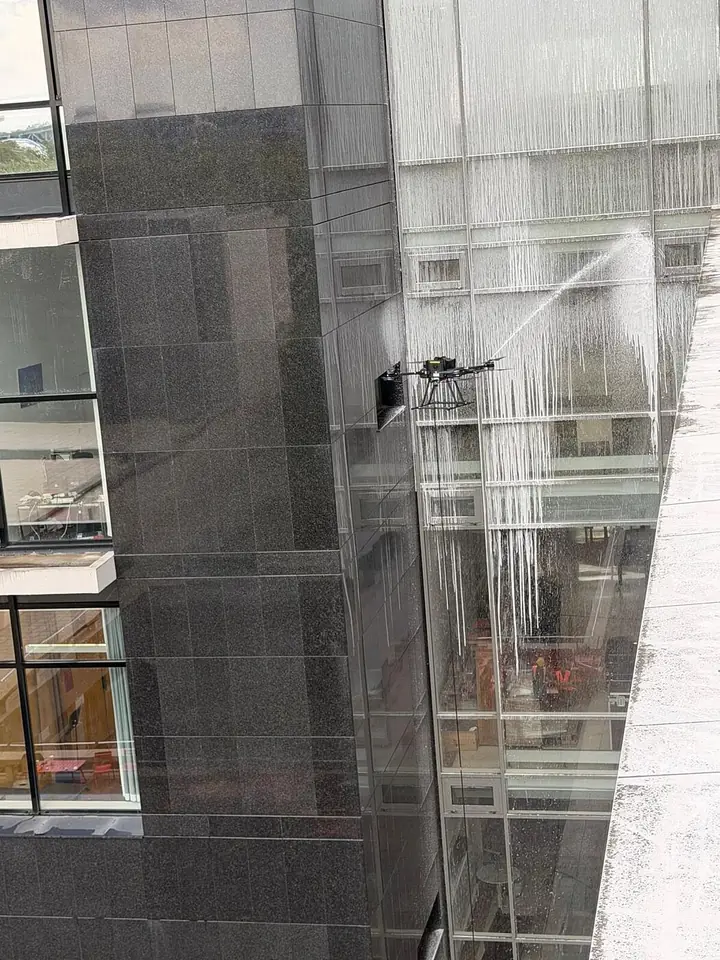
400 m² of glazing in one night
A glass structure above a busy station, cleaned at night with no interruption to traffic. RATP reports that the intervention time was divided by five compared with its usual method.
Photo: curtain-wall cleaning on another CleanAlta site in Paris.
Façade cleaning on video
Where it fits in Thailand
The buildings that gain most are tall, glazed and busy, where rope access or gondolas mean weeks of disruption.
Hotels and resorts
Glass façades, atriums and pool-side buildings cleaned early in the morning, without workers outside guest rooms.
Condominiums and offices
Curtain walls on towers where the gondola is old, booked, or missing on part of the façade.
Hospitals and universities
Sites that stay open: we work with a perimeter and a schedule agreed with the facility team.
Malls and public buildings
Glass roofs, canopies and entrance halls that nobody can reach from inside.
Façade cleaning questions
How fast is drone façade cleaning?
Between 500 and 800 m² per hour on suitable surfaces, depending on how dirty the façade is, the method and the protocol. Set-up, perimeter and finishing by pole come on top.
Will it leave streaks on the windows?
Not with osmosed water. Streaks come from minerals in tap water and from detergent residues. We use neither on glass.
Can the drone damage the façade?
The drone does not touch the building. It sprays from a short distance at low pressure. We test a small area first on sensitive materials and adjust the protocol.
What about wind and monsoon rain?
We do not fly in strong wind or rain. In Thailand we plan jobs in the dry season where possible and keep flexible dates during the monsoon.
Have a building in Thailand that is hard to clean?
Send us a few photos, the address and the approximate height. We will tell you honestly whether a drone, a water-fed pole or a platform is the right tool, and whether your site could join the pilot program.