

Saint-Gobain Recherche: from a first job to a two-passes-a-year contract
Saint-Gobain is the world’s leading glass manufacturer. Its research centre near Paris has large glazed façades over several floors and laboratories that keep working during cleaning. After a first job, Saint-Gobain Recherche signed a contract for two cleaning passes a year.
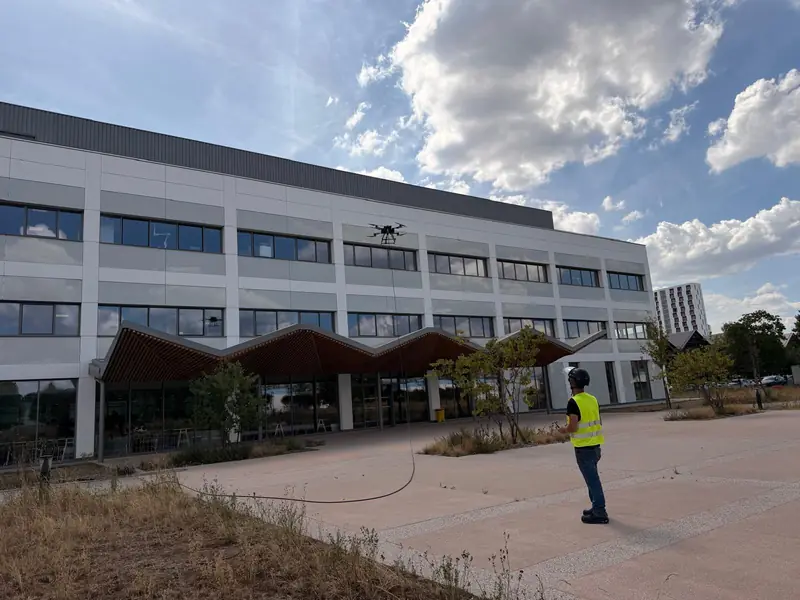
In short: tethered drone for the upper floors, water-fed pole for the lower floors and the entrance, heated purified water and no detergent. Laboratories stayed open. The first job convinced Saint-Gobain Recherche to sign a contract for two cleaning passes a year.
- ClientSaint-Gobain Recherche
- SiteResearch centre, Aubervilliers (Paris region)
- MethodsDrone + water-fed pole
- WaterHeated, osmosed, no detergent
- OutcomeTwo passes a year
The problem
Glass façades over several floors, offices and laboratories behind them, and a site that cannot stop for cleaning. A gondola would have been slow; rope access would have put technicians in front of the windows for days.
What CleanAlta did
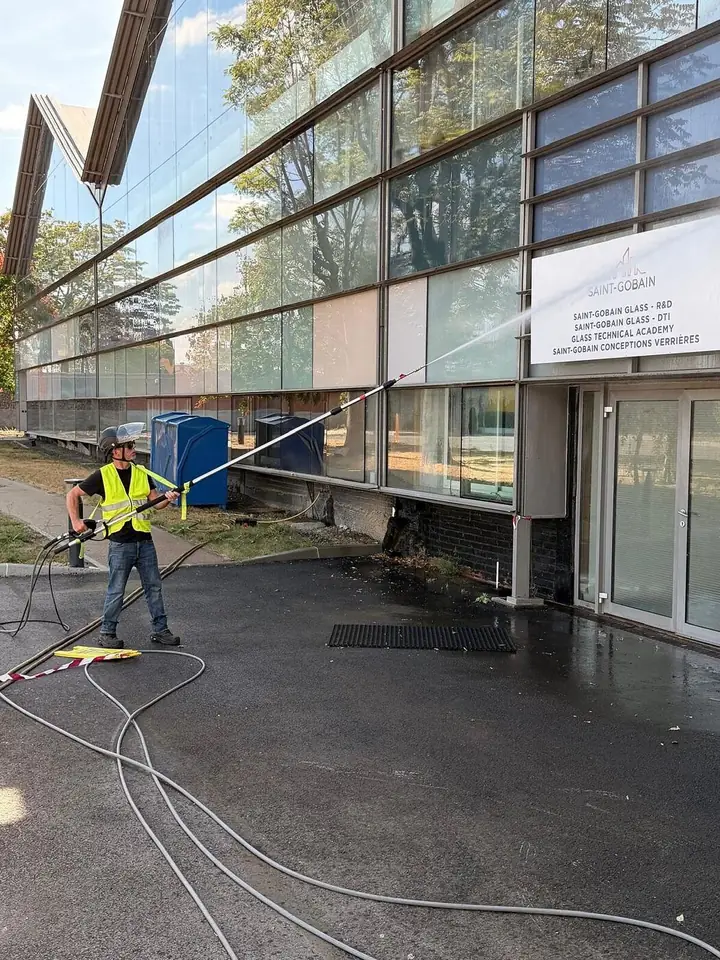
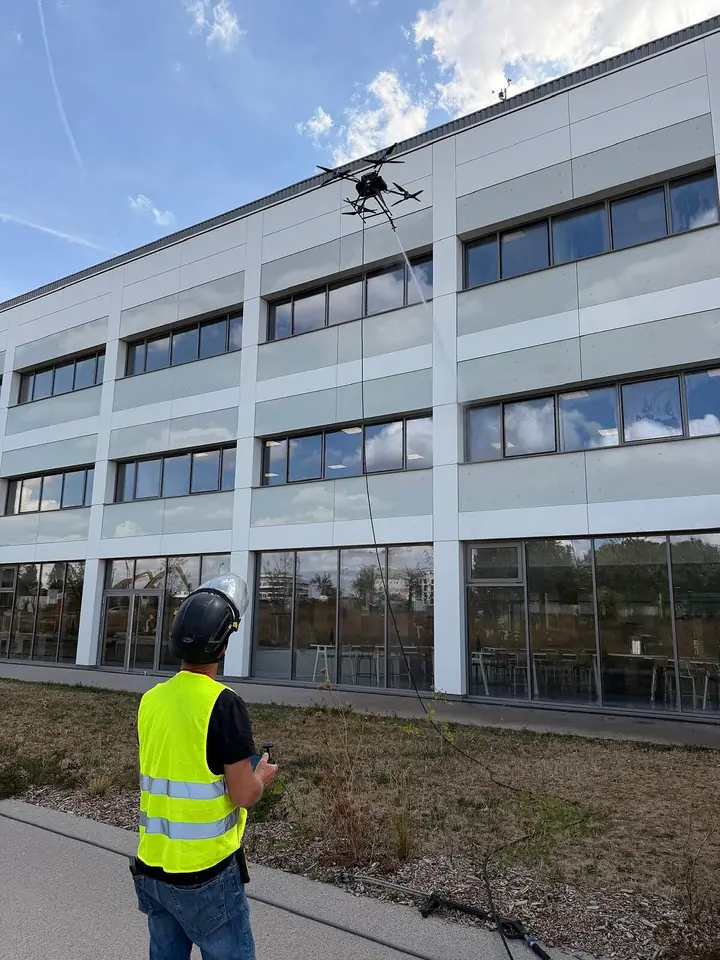
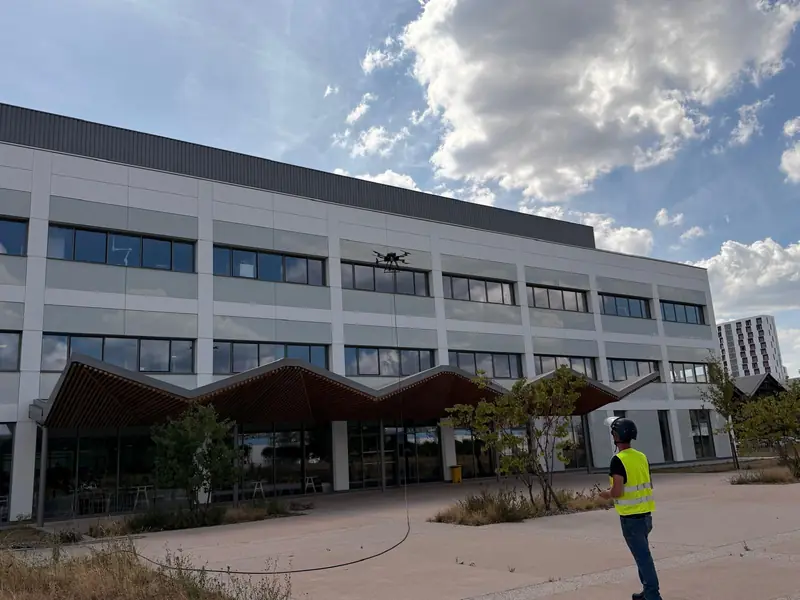
We combined two methods. A tethered drone cleaned the upper floors, spraying heated purified water at low pressure and rinsing it. A 17 m carbon water-fed pole handled the lower floors and the entrance, where precision matters more than speed. Both use the same water, produced on site by the osmosis unit in the van, so the glass dries without streaks and without detergent.
The result
The first job was a test. The client measured the result, compared it with its previous contractor, and signed for two passes a year. For a cleaning company, a recurring contract with a glass manufacturer is the best possible reference on the quality of the result.
Why it matters for Thailand
Office campuses, research centres and factories with glazed office blocks are common in Bangkok, the EEC and the industrial estates. The combination of drone and pole is the one we would use there: fast on the upper floors, precise at ground level, and no interruption for the people working inside.
Photos from the job
Questions about this job
Why no detergent?
Heated osmosed water dissolves dirt and dries without leaving minerals, so there is nothing to rinse off and no residue on the glass. It is also safer for the people and plants below.
Why two methods on one building?
The drone is fastest on large upper surfaces; the pole is more precise near the ground and the entrance. Using both gives the best result for the lowest cost.
Investors, property groups and corporates
We present the Thai launch plan and the figures in a direct meeting, under NDA. Building owners can also apply for a documented pilot job.